
This is a subtitle for your new post

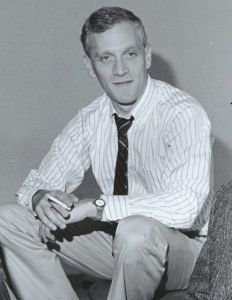
Composer Marvin Hamlisch, right, is shown at the piano with lyricist Howard Ashman in New York City on Sept. 9, 1986. Hamlisch wrote the music for the new Broadway show "Smiles," and Ashman wrote the book, lyrics and directed the show. (AP Photo/Nancy Kaye)*[/caption]

"To our friend Howard, who gave a mermaid her voice and a beast his soul, we will be forever grateful. Howard Ashman 1950–1991."

The Oakland East Bay Gay Men’s Chorus’ summer season this year boasts a roster of songs that, at first glance, appear to tug at the heart of any properly Disney-obsessed child or former child. With “Belle” and “Gaston” from Beauty and the Beast , medleys including classics like “Under the Sea” from The Little Mermaid and “Friend Like Me” from Aladdin , and of course “Kiss the BOY” from The Little Mermaid , our program certainly represents the genre well. The theme of our upcoming concert, however, is not Disney, but specifically the songs of Alan Menken and Howard Ashman.

Menken, likely the better known of the two, has a long and illustrious list of credits and, at 68, is still every bit the composer he was at the beginning of his career. His resume boasts eight Academy Awards, eleven Grammys, and one Tony, among many other accolades, and shows no sign of slowing down. Ashman, too, has an impressive list of awards, among them five Grammys and two Academy Awards. The majority of his awards and nominations, however, were awarded posthumously, as Ashman passed away at the tragically young age of 40 from complications of AIDS.

Upon the receipt of Ashman’s posthumous second Academy Award, the audience was filled with celebrities wearing red ribbons on their lapels to recognize the AIDS crisis. Ashman’s partner, Bill Lauch, accepted the award on Ashman’s behalf, and spoke briefly about the home and life he’d shared with Ashman, before going on to note that the award he held was the first Academy Award to be given to someone who had died of AIDS. Even in what could be considered the height of the AIDS epidemic, Lauch’s speech was surprising in its directness regarding Ashman’s cause of death, an illness that still carried quite a bit of stigma and aroused fear in many. Yet both Lauch’s quiet words and the many red ribbons dotting the audience were a deceptively clear, unafraid display of the place that Ashman had held in the hearts of the musical and film communities, and of their ability to look beyond an illness that, for many sufferers, had ostracized them from their families and closest friends.

Our summer program, “Part of Their World,” can be seen as a throwback to childhood, but it is simultaneously a call to our adult selves, the ones who, whether due to being LGBTQ or due to being members of other marginalized populations, have too many times encountered the feeling of having been isolated and shut out from one’s own community. Our program taps into both who we felt we were as children and who we are as adults, and is both a set of sweet songs about love and a way to recognize those of us – both amongst the chorus and in our audience - who have fought through many trials and tribulations to stand where we are today. Thus, our numbers from The Little Mermaid stage the classic story of a mermaid infatuated with someone from a different land, trapped – voiceless – but forging on for love nevertheless, while Beauty and the Beast witnesses two lovers who have always felt alone in their own homes, but who find community with one another.

Howard Ashman passed away in 1991, four days after the first screening of Beauty and the Beast. Our summer program attempts to encapsulate his struggle, as a gay man dying of AIDS in the 1980s, and then magnifies it into all of us as we sing his music. This reflection of his life is perhaps best heard through a piece that comes in the middle of our program entitled “Sheridan Square,” a never-released number written by Ashman and Menken as a response to the AIDS epidemic, and named after the area in the West Village of New York where the Stonewall Inn is located. The third verse goes:

Some of the boys have panic
But none of the boys leave town
They say, We’re on the good ship Titanic
We’re gonna sing ‘til the boat goes down
And if it ended before it started
Well, no one told us that life is fair
And why is it still so quiet
Tonight, on Sheridan Square?

But despite the crushing isolation Ashman and other LGBT people must have felt in this time, the song ends on a hopeful note:
By Oakland GMC December 3, 2025
Voices from our Chorus David Guerra on Sewing Costumes, Singing Truths, and Finding Family  By June Kamerling
April 25, 2025
Voices from our Chorus Fred Rogers Reflects on His OaklandGMC Journey By June Kamerling
December 13, 2024
Conducting Change: A Chat with Bruce Southard, D.M.A.
By Oakland GMC June 1, 2024
Support the Oakland Gay Men's Chorus this Pride Month!
By Oakland GMC June 1, 2024
By Seth Frost (He/Him), Board Secretary, Baritone. As we welcome Pride Month, it's a time to reflect, celebrate, and honor the journey of the Oakland Gay Men's Chorus (OGMC). Our chorus was established in 1999, and since joining in 2018, I have been proud to be part of this vibrant community. From my very first interaction, I felt a warm embrace, an invitation to be part of something bigger than myself. For many, like myself, OGMC has been a core connection to the queer community, especially for those who came out later in life. Performing shows is more than a passion; it's our way of enriching the broader community in Oakland and the SF Bay Area, showcasing the joy found in queer life. At the heart of OGMC is our mission statement: "The Oakland Gay Men’s Chorus gives voice through song to a community where everyone matters." This guiding principle shapes everything we do. Being in a chorus means standing bravely in public, singing, supporting each other, and creating something more beautiful than any of us could achieve alone. This Pride Month, we're particularly excited about our 25th Anniversary Season, featuring "You Can’t Stop The Beat." This show is a showcase of our talents, with small ensemble and solo pieces prepared by our members. It's also a preview of the music we'll be taking to the national GALA festival in Minneapolis later this summer. Songs like "True Colors" are on the lineup, and I can't wait to see my friends shine. Celebrating Pride in Oakland and at the GALA Festival is especially significant this year. Our recent commission from Marques L. A. Garrett, requested by popular demand, highlights the collaborative spirit of our members. This show, filled with solos and special performances, is a true celebration of our talented membership. What does Pride mean to you? Seth Frost (He/Him), Board Secretary, Baritone. Pride is a call to step forward and assert that we matter, that our voices deserve to be heard. Pride events counteract hate and help heal the shame within ourselves. Singing loudly and proudly, we offer comfort and a beacon to those who can't yet express themselves authentically. Our year-round performances often end with the chorus spreading out around the audience, fostering a sense of community, welcome, and safety for all. June Kamerling (She/Her), Tenor 1 Pride is a celebration of the LGBTQ community and all it stands for. By participating in events like Oakland Pride and Alameda Pride, we give back to the community and practice visibility and inclusion. The impact of our events is profound, creating a supportive community where everyone feels they belong. Shawn Simon (He/Him), Board Vice President, Base Pride means being able to love ourselves unconditionally and seeing others empowered to live authentically. It's important to celebrate Pride to remind ourselves of our worth, connect with our community, and honor our history. Organizing events like our concerts has been profoundly impactful, creating an inclusive community and supporting local organizations.
March 24, 2024
By Melvin Terry  March 31st was declared Cesar Chavez Day in 2014 by President Barack Obama. Cesar Chavez (March 31, 1927 – April 23, 1993) founded along with Delores Huerta the National Farm Workers Association (NFWA), which later merged with the Agricultural Workers Organizing Committee (AWOC) to become the United Farm Workers (UFW) labor union . International Women’s Day was first celebrated in the early 20th century and became a mainstream global holiday in 1977. It helps to focus attention on women and concerns such as gender equality, equal wages, and violence and abuse against women. Another important issue is the lack of attention paid to the substantial contributions of women.
February 20, 2024
By Melvin Terry Oakland is a diverse vibrant community with a goldilocks climate and an assortment of parks and trails with opportunities for exercise, socializing, and stunning visuals. It also has the benefits and drawbacks that come with a large city. But did you know about the history of Black migration to Oakland in the 1940’s and the rich culture that flourished in West Oakland back then? 7th Street, now the home of West Oakland BART and the sprawling main post office, was the hub of the community. There were many Black owned businesses and music venues. It was bustling and the place to be.
December 25, 2023
By Melvin Terry It doesn’t seem so long ago when I first heard of GALA (GayLa), a sort of choral Olympics where queer folks from around the world get together every four years to celebrate our existence and joyously sing for each other. Well, it was 16 years ago, when I first joined the then Oakland East-Bay Gay Men’s Chorus in 2007.
More Posts