


Fourth in a series. Link to The Patron Saint—Edward MacDowell, third in a series.
“The song 'Some Other Time' is full of emotion.
In wartime, it had a tremendously
poignant feeling.”
—Betty Comden
“To achieve great things two things are needed:
a plan, and not quite enough time.”
—Leonard Bernstein
Lenny was 19 when he met Adolph Green in the summer of 1937. Lenny had just finished his sophomore year at Harvard, and was working as a music counselor at a camp in the Catskills. Adolph, a self-described “aimless bum” at the age of 22, was hired on to guest star as the Pirate King in the camp’s production of The Pirates of Penzance . They became best friends, and remained close until Bernstein’s death in 1990. (Adolph was Lenny’s choice for Dr. Pangloss in the “definitive” 1989 recording of Candide .) Later on, they shared an apartment in New York. A mutual friend introduced them to Betty Comden. The three of them, along with Judy Holliday, formed a comedy troupe called “The Revuers,” and performed often in Greenwich Village. Bernstein played piano in lots of late-night jam sessions, absorbing the language of popular songs and jazz.
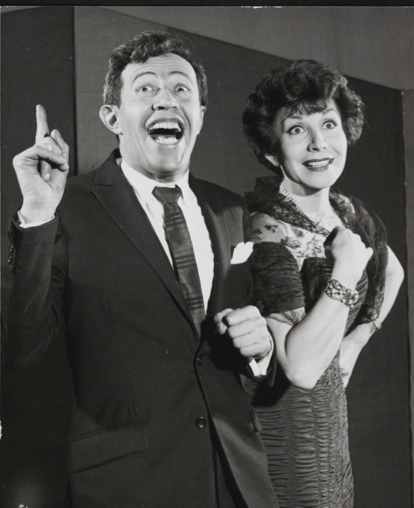
In 1944, while Bernstein was building his career as a conductor and “serious” composer, he collaborated with choreographer Jerome Robbins on a ballet score, Fancy Free , which they then decided to expand into a Broadway musical, On the Town . They brought in the new writing team of Comden and Green for the book and the lyrics, and to lead the cast. The show, which opened in wartime, and put the war itself front and center, was a huge hit. Critic Henry Simon wrote: “Bernstein bridges the gap between the Tin Pan Alley idiom and Copland-Stravinsky so successfully… The highly expert ballet music and the smart Broadway songs seem to be all of a piece. The lyrics belong to the tunes, the tunes to the orchestration, the dancing to both, and all of them to the high-spirited, youthful vitality of a swift-moving show.” Clearly the young team was on its way! An interesting side note— On the Town was the first time that a fully integrated “mixed cast,” including six African Americans, was seen on the Great White Way.
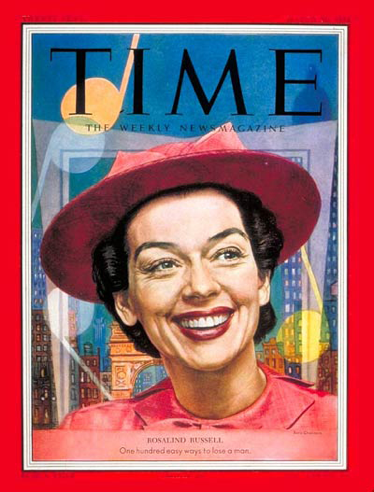
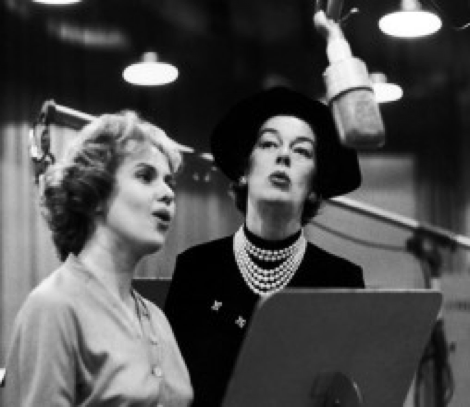
The same team repeated their triumph in 1953, with Wonderful Town . In what was to become a pattern, the show featured a fantastic score, dancing as a central part of the narrative, and a feisty woman in a central role. Ruth Sherwood (played so memorably by Rosalind Russell) is smart, and she’s proud of it! Like its predecessor, Wonderful Town also didn’t hold back from some not-so-subtle politicizing, at a time when “self-expression” and “Greenwich Village” were code words for lefties and Commie-pinkos.
Lenny’s next venture on Broadway was the operetta Candide , in 1956, which proved a disappointment in its relatively short run, and ended up being edited and reedited by its composer through the years, with several lyricists. It lives on, though, with numerous revivals and concert performances, and the effervescent overture is an orchestra staple around the world. Candide was, if anything, even more political than Wonderful Town , complete with an Inquisition scene. (“What a day! What a day, for an auto-da-fé!” )
By that time, the team of Comden and Green were at the top of their game, writing, among other things, the book and lyrics for Bells Are Ringing , with Jule Styne, and the screenplays for Singin’ in the Rain and Auntie Mame .
While Candide was in the works, Bernstein was busy simultaneously with Arthur Laurents and Jerry Robbins on an adaptation of Romeo and Juliet , reimagined as gang warfare on the streets of New York— West Side Story . He’d signed on to write the music and lyrics, but, to no one’s particular surprise, Lenny found himself overextended. (Imagine that! He still maintained his busy schedule as a globetrotting conductor, pianist, and celebrity.) He ended up taking Laurents’ advice and bringing on a fresh, young lyricist named Stephen Sondheim, launching a legendary career. We’ll have more to say about that wünderkind in another post.
After that, Lenny mostly stayed away from Broadway for quite a while. His return did not go well! In 1976, he teamed with lyricist Alan J. Lerner ( My Fair Lady , Camelot , etc.) on a musical to celebrate the Bicentennial; a sort of “Upstairs, Downstairs,” centered on the White House through the 19 th Century, and focusing on race relations. 1600 Pennsylvania Avenue closed after 7 performances. The show had gone through extensive revisions in tryouts, none of which involved Lenny, and by the time it got to Broadway it was a colossal mess. Only Lenny’s score—what remained of it— got good reviews. It left at least one good song, “Take Care of This House,” (which we’re performing), as well as a bitter taste in its composer’s mouth. He never returned to Broadway. He reused the music in the years that followed, but he, and then his estate, have refused permission to publish, perform, or record it in its original form.
In the cracks of his busy life he wrote songs for a performance in 1950 of Peter Pan , starring Boris Karloff as Captain Hook. He also contributed French songs in a quasi-medieval style in 1964, for a production of Jean Anouilh’s The Lark , starring Julie Harris as Joan of Arc, and adapted by Lillian Hellman, who’d worked with Lenny on Candide .
Berkeley composer John Adams has written “Bernstein the composer is at his best when the music is choreographic and suffused with sensuality. West Side Story is, to my mind, by far and away his masterpiece. None of the “serious” symphonic works can come near it for spontaneity, verve, sheer sexual energy, and the power to move the listener emotionally and physically.”
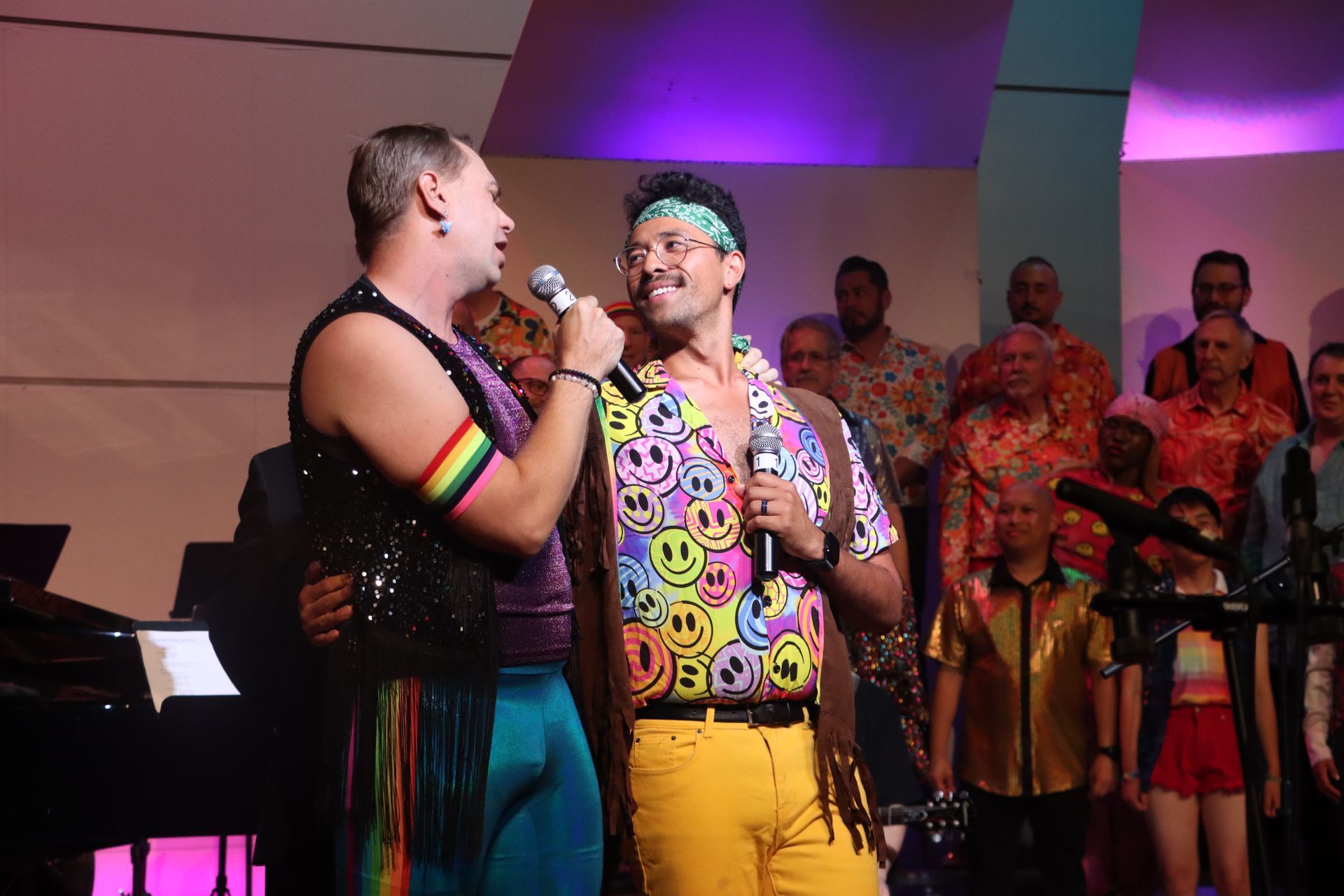
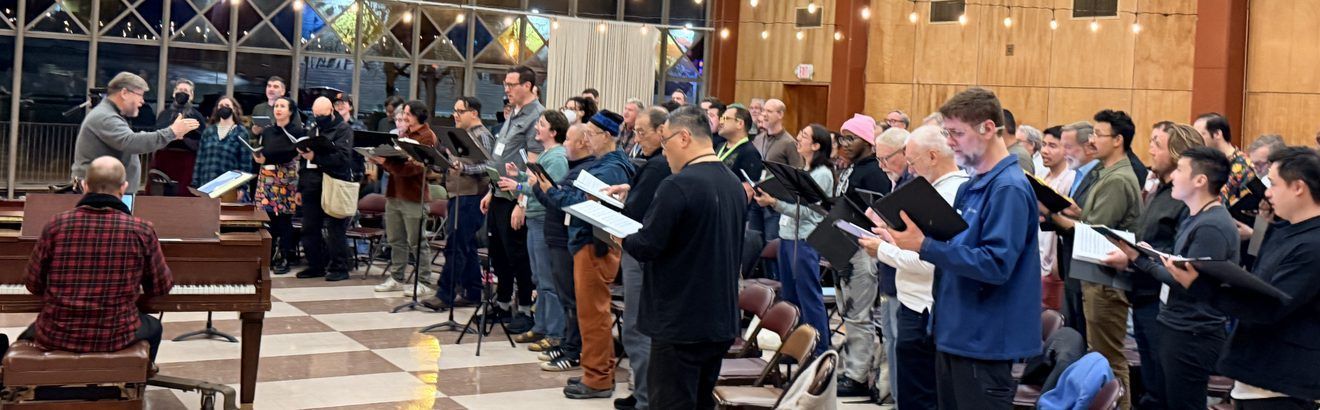
“Lenny & Friends,” presented by the Oakland-East Bay Gay Men’s Chorus, will include selections from On the Town , Wonderful Town , and West Side Story , of course. But we’re also performing great songs from Peter Pan and 1600 Pennsylvania Avenue , as well as two French Choruses from The Lark .
Have you bought your tickets yet? This is a concert not to be missed!