

The fifth in a series. Link to Lenny on Broadway, fourth in a series.
“Steve is the most important force
in the American musical theater.
He combines wit and intelligence
in a very special way,
and he’s willing to take chances.”
Leonard Bernstein
“Maybe you could show me
how to let go,
lower my guard,
learn to be free.
Maybe if you whistle,
whistle for me.”
From “Anyone Can Whistle,” reported to be Mr. Sondheim’s favorite of his songs.
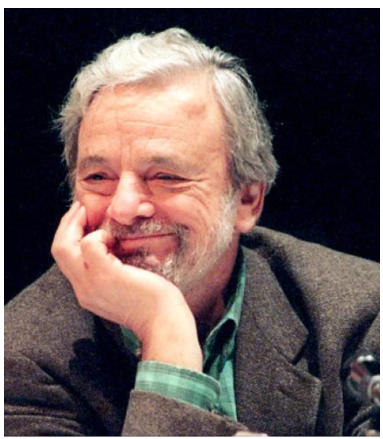
As I write this, Stephen Sondheim has just celebrated his 88 th birthday. By now every acolyte knows the story of his early years: The child of a bad marriage, with a father who left his wife for another woman, and a cold, isolating mother whom Stephen openly detested. At the age of 10 he was taken in by the father of one of his friends, who became a substitute parent to him. That was Oscar Hammerstein II; he was working on South Pacific at the time. Steve asked the master lyricist to critique his early work. He did, quite harshly, but by the time they were finished years later the kid knew how to craft a lyric. British producer Cameron Mackintosh described Stephen Sondheim as “perhaps the greatest lyricist ever.” So, you’d think that music was a secondary interest. But if you thought that you’d be wrong. His first theater teacher at Williams College suggested he study music composition privately with Milton Babbitt. So, he did. This is the man whom John Adams called “the Yoda of American Serialism;” but they got along. It seemed the crusty old master had a taste for popular music. Steve said about Babbitt, "I am his maverick, his one student who went into the popular arts with all his serious artillery."
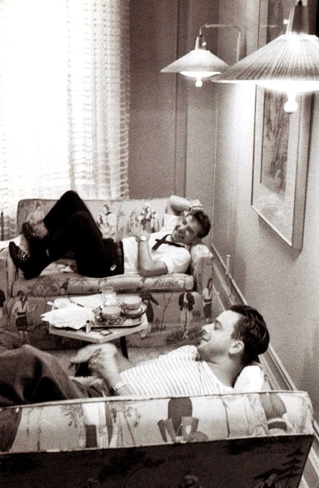
When Arthur Laurents approached Sondheim to be the co-lyricist for West Side Story, Oscar Hammerstein actually had to convince his young protégé that this was one hell of an opportunity to learn from the best in the business.
Sondheim had been hired on as co-lyricist, with Bernstein. When the out-of-town reviews didn’t mention him at all he fell into a funk. Lenny had grown quite close to him as they shopped the show for backers, playing piano four-hands. He removed his name from the lyricist credits, thereby launching his young friend’s career in one extremely magnanimous gesture. To this day there’s no record of who wrote what.
After the show opened to raves, he had another offer from Laurents to reunite with him and Jerome Robbins to write the lyrics for Gypsy , with the music by Jule Styne. Ethel Merman, the name-above-the-title star, making yet another comeback as Mama Rose, rejected the idea of a first-time composer. Again, Steve was stubborn in his desire to write the music, and again, Hammerstein told him not to be an idiot. Looking back, it’s hard to imagine Steve writing the songs for Follies , in 1971, without having internalized the musical language of both Bernstein and Jule Styne.
He finally got his chance to write the lyrics and the music for the 1962 riotous farce, A Funny Thing Happened on the Way to the Forum , which, as you might expect with the benefit of hind-sight, has a score that’s surprisingly challenging.
Anyone who’s ever sung a Sondheim song will tell you that it’s never easy. Even when it’s relatively simple and straightforward, and sounds easy, it isn’t easy. This writer remembers being in a production of A Funny Thing… at Stanford in 1969. (I was Hero, the juvenile lead. Please don’t laugh…) The director ended up cutting the song “Pretty Little Picture” because the actor playing Pseudolus couldn’t handle the angular melody and the tricky rhythms. A difficult song, in a really silly comedy! It’s easy to imagine that Steve thinks that life isn’t easy, so why should his songs be? He’d probably agree with Aaron Copland, who wrote “… serious music was never meant to be used as a soporific. Contemporary music, especially, is created to wake you up, not put you to sleep. It is meant to stir and excite you, to move you--it may even exhaust you. But isn't that the kind of stimulation you go to the theater for, or read a book for? Why make an exception for music?”
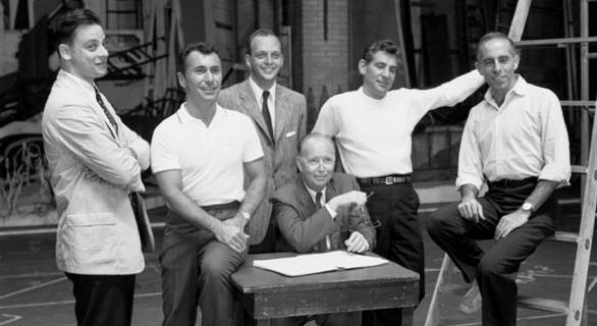
Does it seem superfluous to review Stephen Sondheim’s remarkable career? Maybe, but just for the record, he won 7 Tonys for Best Musical or Best Score & Lyrics— A Funny Thing Happened on the Way to the Forum ( 1963), Company (1971), Follies (1972), A Little Night Music (1973), Sweeney Todd (1979), Into the Woods (1988), and Passion (1994). He also received a Tony for Lifetime Achievement in 2008. He was awarded the Pulitzer Prize in Drama in 1985, for Sunday in the Park with George , and won the Best Original Song Oscar in 1990 for “Sooner or Later,” from Dick Tracy . He was the recipient of a Kennedy Center Honor in 1993, and the MacDowell Medal in 2013.
He and Lenny didn’t win the Tony for West Side Story. It lost to The Music Man ; a much safer show in 1957. Still it seems wrong…
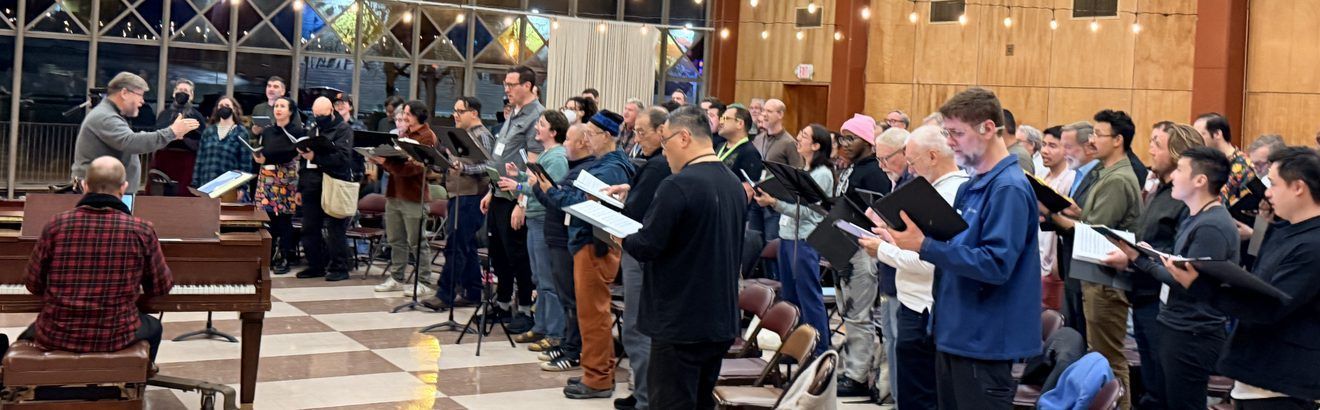
Besides the songs from West Side Story , the Oakland-East Bay Gay Men’s Chorus’s Lenny & Friends concert will include a luscious arrangement of “Send in the Clowns,” from A Little Night Music , as well as “Everybody Says Don’t,” from Anyone Can Whistle , a legendary flop from 1964 that closed after 9 performance, but left a couple of great songs.
Be there!